<!DOCTYPE html PUBLIC "-//W3C//DTD XHTML 1.0 Transitional//EN"><html xml:lang="it">
<head>
<META http-equiv="Content-Type" content="text/html; charset=ISO-8859-1">
<title>
				IMSS - VI.3. Shadows, Lights and Colors</title>
<base href="http://brunelleschi.imss.fi.it/menteleonardo/">
<meta http-equiv="Content-Type" content="text/html; charset=iso-8859-1">
<meta http-equiv="description" content="">
<meta http-equiv="keywords" content="">
<meta meta="htdig-keywords" content="applesp">
<meta http-equiv="dc:language" content="ENG">
<meta http-equiv="dc:rights" content="Istituto e Museo di Storia della Scienza, Firenze, Italia"><script>
	
		
function restringi(indirizzo){
								document.cerca.keywords.value=indirizzo;
								this.document.cerca.submit();
							  }
function MM_openBrWindow(theURL,winName,features) {window.open(theURL,winName,features);}

function MM_swapImgRestore() { //v3.0
  var i,x,a=document.MM_sr; for(i=0;a&&i<a.length&&(x=a[i])&&x.oSrc;i++) x.src=x.oSrc;
}

function MM_preloadImages() { //v3.0
  var d=document; if(d.images){ if(!d.MM_p) d.MM_p=new Array();
    var i,j=d.MM_p.length,a=MM_preloadImages.arguments; for(i=0; i<a.length; i++)
    if (a[i].indexOf("#")!=0){ d.MM_p[j]=new Image; d.MM_p[j++].src=a[i];}}
}

function MM_findObj(n, d) { //v4.01
  var p,i,x;  if(!d) d=document; if((p=n.indexOf("?"))>0&&parent.frames.length) {
    d=parent.frames[n.substring(p+1)].document; n=n.substring(0,p);}
  if(!(x=d[n])&&d.all) x=d.all[n]; for (i=0;!x&&i<d.forms.length;i++) x=d.forms[i][n];
  for(i=0;!x&&d.layers&&i<d.layers.length;i++) x=MM_findObj(n,d.layers[i].document);
  if(!x && d.getElementById) x=d.getElementById(n); return x;
}

function MM_swapImage() { //v3.0
  var i,j=0,x,a=MM_swapImage.arguments; document.MM_sr=new Array; for(i=0;i<(a.length-2);i+=3)
   if ((x=MM_findObj(a[i]))!=null){document.MM_sr[j++]=x; if(!x.oSrc) x.oSrc=x.src; x.src=a[i+2];}
}

		
					coloreSfondo='#98907d';
					coloreSopra= '#2F91B8';
					coloreCorrente='#2F91B8';
			
					immagineCorrente = 0;
					totIcone = -1;
					pathImm = new Array;
					didascalie = new Array;
					titolo = new Array;
					chiaveImm = new Array;
					filmato = new Array;


function restringi(applicazione){
								document.cerca.keywords.value=applicazione;
								this.document.cerca.submit();
							  }
function MM_openBrWindow(theURL,winName,features) {window.open(theURL,winName,features);}

function aprifin(codice)
	{	
	window.open("emulti.asp?c=" + codice, "", "menubars=no, width=700, height=450, resizable=yes");
	}
function aprifinaudio(titolo)
	{	
	window.open("mm/" + titolo + ".mp3", "", "menubars=no, width=700, height=450, resizable=yes");
	}

function cambiaImg (id, path, dida, titolo,filmato) {
		
		//document.images["img"+immagineCorrente].style.borderColor='#98907d';
		immagineCorrente = id;
		//document.images["img"+immagineCorrente].style.borderColor='#2285A7';
		document.images.ingrandimento.src=path;
		document.images.ingrandimento.alt=titolo;
		
		var padre1=document.getElementById("Filmato");
		var nonno1=padre1.parentNode;
		nonno1.removeChild(padre1);		
		padre1 = document.createElement("span");
		padre1.setAttribute("id","Filmato");
		nonno1.appendChild(padre1);
		
		tagBr=document.createElement('br');
					padre1.appendChild(tagBr);
		if(filmato != '')
		{	
		if(titolo=='VI.5B.b4')
				audio=true;
		else
				audio=false;
				
		
			tagImg=document.createElement("img");
			tagImg.setAttribute("src",audio ? "images/iconcina-audio.jpg" : "images/icona-multimedia.gif");
			tagImg.setAttribute("width","10");			
			tagImg.setAttribute("height","9");
			tagImg.setAttribute("hspace","2");
			tagImg.setAttribute("vspace","4");
			tagImg.setAttribute("align","absmiddle");
			tagA=document.createElement("a");
			if (audio)
			 {
				tagA.setAttribute("href", "javascript:aprifinaudio('"+titolo+"')");
				}
			else
				{
				tagA.setAttribute("href", "javascript:aprifin("+filmato+")");
				}
			tagA.setAttribute("class","linkleomm");
			padre1.appendChild(tagImg);
			padre1.appendChild(tagA);
			var testo=document.createTextNode(audio ?  "Listen" : "Launch video");
			tagA.appendChild(testo);

			 }
		
			 
		var padre=document.getElementById("testoDida");
		document.getElementById("testoTitolo").childNodes[0].nodeValue=titolo;
		var nonno=padre.parentNode;
		nonno.removeChild(padre);
		padre.appendChild(tagBr);
		
		padre = document.createElement("span");
		padre.setAttribute("id","testoDida");
		nonno.appendChild(padre);
		
		padre.nodeValue=cambia(dida, padre);


		}


function aggiustaApici(testo) {
	while (testo.indexOf("|")>-1) {
		testo = testo.substring(0,testo.indexOf("|"))+"'"+testo.substring(testo.indexOf("|")+1,testo.length);
	}
	return testo;
}


function prepara(){

	
			var url=document.URL;
			var dove=url.indexOf('#');
				
				if (dove<=0)
			
		{
				initBordo();
				return;
			}
			var quale=url.substring(dove+1);
	
	for (i=0;i<=totIcone;i++) 
			{
	
					if (titolo[i]==quale)
				{
				cambiaImg(i,pathImm['img'+i],aggiustaApici(didascalie[i]),aggiustaApici(quale),filmato[i]);
				break;
				}
			}	
	for (i =0; i<document.images.length; i++)
			{
					if(document.images[i].name != 'ingrandimento' && document.images[i].alt == document.ingrandimento.alt)
				{
					document.images[i].style.borderColor=coloreCorrente;
					grande=i;
				}
			else
				{
				if(document.images[i].name != 'ingrandimento')
						document.images[i].style.borderColor=coloreSfondo;
				}
		}
}

function initBordo(){

	var i;
		if(filmato[0]!='')
			cambiaImg(0,pathImm['img'+ 0],didascalie[0],titolo[0],filmato[0]);
		
				for (i =0; i<document.images.length; i++)
					{
					//alert(document.images[i].name + "-" + document.images[i].alt);
						if(document.images[i].name != 'ingrandimento' && document.images[i].alt == document.ingrandimento.alt)
						{
			
								document.images[i].style.borderColor=coloreCorrente;
								break;
						}		
					}	
		
		
}


function cambiaBordo(sorge, sopra) {
		var i;
			coloreSfondo='#98907d';
			coloreSopra= '#2F91B8';
			coloreCorrente='#2F91B8';
			colore=sopra ? coloreSopra :coloreSfondo;

			var grande;

			
		for (i =0; i<document.images.length; i++)
		{
			if(document.images[i].name != 'ingrandimento' && document.images[i].alt == document.ingrandimento.alt)
			{
					document.images[i].style.borderColor=coloreCorrente;
					grande=i;
			}
			else
			{
				if(document.images[i].name != 'ingrandimento')
						document.images[i].style.borderColor=coloreSfondo;
			}
			
			if (document.images[i].src==sorge)
			{
						if(i!=grande)
							document.images[i].style.borderColor=colore;
			}
					
		 }
}

function italiano(c,k,r) {
			cancelletto=document.ingrandimento.alt;
			window.location='imdl.asp?c='+c+'&k='+k+'&rif='+r+'&xsl=1#'+cancelletto;
			
}


//var primo = true;

function cambia(t, idPadre) {

	if (t.indexOf("<br/>")>-1) {
		var t1 = t.substring(0,t.indexOf("<br/>"));
		var t2 = t.substring(t.indexOf("<br/>")+5,t.length);
		aggiungiParagrafo(t1, idPadre);
		cambia (t2, idPadre);
	} else
		aggiungiParagrafo(t, idPadre);
}

function aggiungiParagrafo (t, idPadre) {

	/* --------------------------------- va cambiato x con l'id del div che contiene la didascalia ------- */
	
	//var x = document.getElementById(idPadre);

	var x =document.getElementById('testoDida');

	/*if (primo)
		primo = false;
	else {
		var br = document.createElement("br");
		x.appendChild(br);
	}
	*/

		var br = document.createElement("br");
		x.appendChild(br);


	aggiungiTesto (t, x);
	//x.appendChild(document.createTextNode(t));

}

function aggiungiTesto (t, x) {

	if (t.indexOf("<i>") > -1) {
		var t1 = t.substring(0,t.indexOf("<i>"));
		var t2 = t.substring(t.indexOf("<i>")+3,t.indexOf("</i>"));
		var t3 = null;
		if (t.length > (t.indexOf("</i>")+4))
			t3 = t.substring(t.indexOf("</i>")+4, t.length);
		x.appendChild(document.createTextNode(t1));
		var i = document.createElement("i");
		i.appendChild(document.createTextNode(t2));
		x.appendChild(i);
		if (t3 != null)
			aggiungiTesto(t3, x);
	} else {
		x.appendChild(document.createTextNode(t));
	}
}

</script>
</script><link rel="stylesheet" href="../espo-leo.css" type="text/css">
</head>
<body onload="prepara()">
<div id="intestazione">
<div class="blocco"></div>
<div id="logo"><a href="http://www.museogalileo.it/en/index.html"><img src="../elogo-espo.gif" alt="logo Museo Galileo - Istituto e Museo di Storia della Scienza" width="475" height="37" border="0"></a></div>
</div>
<div id="navigazione">
<div class="blocco"></div>
<div id="quadretti"><img src="../quadretti.jpg" alt="quadretti" width="39" height="19" align="left"></div>
<div id="lingua"><a href="javascript:italiano(13419,13397,13409)">ITALIANO</a> / <span class="grigio">ENGLISH</span></div>
</div>
<table id="corpo" border="0" cellpadding="0" cellspacing="0">
<tr>
<td bgcolor="#958881" height="3" nowrap><img src="images/spacer.gif" height="3"></td></tr>
<tr>
<td bgcolor="#230D01" class="inalto"><div align="left">
<table width="100%" border="0" cellspacing="0" cellpadding="0">
<tr>
<td bgcolor="#230D01"> </td>
<td bgcolor="#230D01">
<table width="369" border="0" align="left" cellpadding="0" cellspacing="0">
<tr>
<td width="61" height="63" nowrap><a href="emdl.asp?c=13419&amp;k=1470&amp;rif=1470" onmouseout="MM_swapImgRestore()" onmouseover="MM_swapImage('I','','images/menu_01l.gif',1)"><img src="images/menu_01n.gif" alt="Sezione I" name="I" width="60" height="63" border="0" id="I"></a></td>
<td width="61" height="63" nowrap><a href="emdl.asp?c=13419&amp;k=13369&amp;rif=13369&amp;xsl=1" onmouseout="MM_swapImgRestore()" onmouseover="MM_swapImage('II','','images/menu_02l.gif',1)"><img src="images/menu_02n.gif" alt="Sezione II" name="II" width="60" height="63" border="0" id="II"></a></td>
<td width="61" height="63" nowrap><a href="emdl.asp?c=13419&amp;k=13394&amp;rif=13394" onmouseout="MM_swapImgRestore()" onmouseover="MM_swapImage('III','','images/menu_03l.gif',1)"><img src="images/menu_03n.gif" alt="Sezione III" name="III" width="60" height="63" border="0" id="III"></a></td>
<td width="61" height="63" nowrap><a href="emdl.asp?c=13419&amp;k=13363&amp;rif=13363" onmouseout="MM_swapImgRestore()" onmouseover="MM_swapImage('IV','','images/menu_04l.gif',1)"><img src="images/menu_04n.gif" alt="Sezione IV" name="IV" width="60" height="63" border="0" id="IV"></a></td>
<td width="61" height="63" nowrap><a href="emdl.asp?c=13419&amp;k=13362&amp;rif=13362" onmouseout="MM_swapImgRestore()" onmouseover="MM_swapImage('V','','images/menu_05l.gif',1)"><img src="images/menu_05n.gif" alt="Sezione V" name="V" width="60" height="63" border="0" id="V"></a></td>
<td><a href="emdl.asp?c=13419&amp;k=13397&amp;rif=13397"><img src="images/menu_06c.gif" width="60" height="63" alt="Sezione VI" border="0"></a></td>
<td width="61" height="63" nowrap><a href="emdl.asp?c=13419&amp;k=23343&amp;rif=23343" onmouseout="MM_swapImgRestore()" onmouseover="MM_swapImage('VII','','images/menu_07l.gif',1)"><img src="images/menu_07n.gif" alt="Sezione VII" name="VII" width="60" height="63" border="0" id="VII"></a></td>
</tr>
</table>
</td>
<td bgcolor="#230D01"><div align="right"><a href="index.html"><img src="images/mindofleonardo_09.gif" alt="The Mind of Leonardo" width="328" height="63" border="0"></a></div>
</td>
</tr>
<tr>
<td bgcolor="#958881" colspan="3" height="3" nowrap><img src="images/spacer.gif" height="3"></td>
</tr>
<tr>
<td colspan="3">
<table width="100%" cellspacing="0" cellpadding="0">
<tr>
<td><div align="right"><span class="xsmall"><a href="emdl.asp?c=13419&amp;k=13397&amp;rif=13410&amp;xsl=1" class="linkleo">&lt; previous</a><span class="grigio"> | </span><a href="emdl.asp?c=13419&amp;k=13397&amp;rif=13408&amp;xsl=1" class="linkleo">next &gt;</a></span>  </div></td>
</tr>
</table>
</td>
</tr>
<tr><td width="10" nowrap><img src="images/spacer.gif" width="10"></td>
<td colspan="2">
<table border="0" align="left" cellpadding="0" cellspacing="0">
<tr>
<td rowspan="4" valign="top" align="center" width="320">
<table border="0" cellpadding="0" cellspacing="0" width="320" nowrap="nowrap">
<tr>
<td valign="top">
</td>
<td align="center"><img src="http://vitruvio.imss.fi.it/foto/mdl/VI_3rs.jpg" name="ingrandimento" alt="VI.3" border="1" class="leoimggalleria"></td>
<td valign="top">
</td>
</tr>
<tr>
<td> </td>
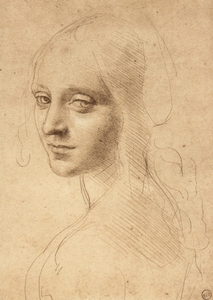
<td width="240" colspan="3" align="left"><span><span id="Filmato"></span></span><br><span class="leotitoloimmag"><span id="testoTitolo">VI.3</span></span><span class="leodidascalia"><span id="testoDida"><br>Leonardo da Vinci, <i>Head of a woman</i>, Biblioteca Reale, Turin, 15572r</span></span></td>
<td> </td>
</tr>
</table></td>
<td nowrap> </td>
<td><span class="parent-liv1">[</span><span class="numeri-liv2">VI.3</span>  <span class="titolo-liv2">Shadows, Lights and Colors</span><span class="parent-liv1">]</span></td>
<td> </td>
<td nowrap> </td>
</tr>
<tr>
<td nowrap><img src="images/spacer.gif" width="10"></td>
<td nowrap> </td>
</tr>
<tr>
<td rowspan="2" nowrap><img src="images/spacer.gif" width="10"></td>
<td valign="top">
<table id="text" border="0" cellpadding="0" cellspacing="0">
<tr>
<td rowspan="2" nowrap> </td>
<td> </td>
<td rowspan="2" nowrap> </td>
</tr>
<tr>
<td valign="top" class="leobodytext">
<p><campo tipocampo="T" nome="txtxml" style=""><div class="Section1" xmlns:w="http://schemas.microsoft.com/office/word/2003/wordml" xmlns:o="urn:schemas-microsoft-com:office:office" xmlns:v="urn:schemas-microsoft-com:vml" xmlns:WX="http://schemas.microsoft.com/office/word/2003/auxHint" xmlns:aml="http://schemas.microsoft.com/aml/2001/core" xmlns:w10="urn:schemas-microsoft-com:office:word">
<p class="Normal-P" style="text-align:justify;text-justify:inter-ideograph;"><span class="Normal-H">For Leonardo, shadows are a basic component of painting. On them, in fact, depends the effect of relief. He conducts a series of innovative experiments to determine their nature, size, shape and intensity.</span></p>
<p class="Normal-P" style="text-align:justify;text-justify:inter-ideograph;"><span class="Normal-H">Starting from the complex geometries of shadows, Leonardo's research extends to analyzing colors and the phenomena of their reflections. Falling within this sphere of research are his refined considerations on "sfumato".</span></p>
</div></campo><campo tipocampo="T" nome="txtxml" style=""><div class="Section2" xmlns:w="http://schemas.microsoft.com/office/word/2003/wordml" xmlns:o="urn:schemas-microsoft-com:office:office" xmlns:v="urn:schemas-microsoft-com:vml" xmlns:WX="http://schemas.microsoft.com/office/word/2003/auxHint" xmlns:aml="http://schemas.microsoft.com/aml/2001/core" xmlns:w10="urn:schemas-microsoft-com:office:word">
<p class="Normal-P" style="text-align:justify;text-justify:inter-ideograph;"><span class="Normal-H">The characteristic perhaps most greatly admired in Leonardo&#8217;s works is the refined <span style="font-style:italic;">sfumato</span> of the flesh tones. Through the technique of <span style="font-style:italic;">sfumato</span>, the transition between light and shadow in the subjects portrayed is realized by exceptionally delicate gradation. Based on the research carried out by Jacques Franck a convincing hypothesis has been formulated, which is compatible with the material evidence of the <span style="font-style:italic;">Mona Lisa</span> as analysed by the Louvre&#8217;s laboratory, on the method employed by Leonardo to achieve these effects: the micro-division of tones, a procedure described in detail for the first time here.</span></p>
</div></campo></p><br></td>
</tr>
</table>
</td>
<td valign="top"> </td>
</tr>
<tr>
<td align="left" valign="top"><table width="100%" border="0" align="left" cellpadding="4" cellspacing="2" id="anteprime">
<tr>
<td align="left" valign="middle">
<ul>
<div align="left">
<li class="leoanteprime">
<pre><img src="images/spacer.gif" alt="0" width="47" height="60" align="absmiddle"><img src="http://vitruvio.imss.fi.it/foto/mdl/VI_3r.gif" alt="VI.3" name="img00" hspace="2" align="absmiddle" onclick="cambiaImg(0,'http://vitruvio.imss.fi.it/foto/mdl/VI_3rs.jpg', aggiustaApici('Leonardo da Vinci, <i>Head of a woman</i>, Biblioteca Reale, Turin, 15572r'), aggiustaApici('VI.3'), '')" style="cursor:pointer; border-color:#98907d" onmouseover="cambiaBordo('http://vitruvio.imss.fi.it/foto/mdl/VI_3r.gif', true)" onmouseout="cambiaBordo('http://vitruvio.imss.fi.it/foto/mdl/VI_3r.gif', false)" border="1"><script>
				totIcone++;
				pathImm["img"+totIcone] = 'http://vitruvio.imss.fi.it/foto/mdl/VI_3rs.jpg';
				didascalie[totIcone]='Leonardo da Vinci, <i>Head of a woman</i>, Biblioteca Reale, Turin, 15572r';
				titolo[totIcone]='VI.3';
				chiaveImm[totIcone]='13762';
				filmato[totIcone]='';
			</script></pre>
</li>
</div>
<div align="left">
<li class="leoanteprime">
<pre><img src="images/a.gif" alt="a" width="47" height="60" align="absmiddle"><img src="http://vitruvio.imss.fi.it/foto/mdl/VI_3_a_apice1r.gif" alt="VI.3.a1" name="img0a" hspace="2" align="absmiddle" onclick="cambiaImg(0,'http://vitruvio.imss.fi.it/foto/mdl/VI_3_a_apice1rs.jpg', aggiustaApici('Leonardo da Vinci, Ms. A, 1r<br/>This tiny drawing (2 cm high) is a singular self-portrait. Leonardo traces the outline of his own shadow projected by the light of the sun, entering the room through the window behind him. The image illustrates the phenomenon of deformation of the contour of a shadow, called &quot;drop effect&quot;, at the point of tangency between the top of the head and the upper edge of the window.'), aggiustaApici('VI.3.a1'), '')" style="cursor:pointer; border-color:#98907d" onmouseover="cambiaBordo('http://vitruvio.imss.fi.it/foto/mdl/VI_3_a_apice1r.gif', true)" onmouseout="cambiaBordo('http://vitruvio.imss.fi.it/foto/mdl/VI_3_a_apice1r.gif', false)" border="1"><script>
				totIcone++;
				pathImm["img"+totIcone] = 'http://vitruvio.imss.fi.it/foto/mdl/VI_3_a_apice1rs.jpg';
				didascalie[totIcone]='Leonardo da Vinci, Ms. A, 1r<br/>This tiny drawing (2 cm high) is a singular self-portrait. Leonardo traces the outline of his own shadow projected by the light of the sun, entering the room through the window behind him. The image illustrates the phenomenon of deformation of the contour of a shadow, called "drop effect", at the point of tangency between the top of the head and the upper edge of the window.';
				titolo[totIcone]='VI.3.a1';
				chiaveImm[totIcone]='13469';
				filmato[totIcone]='';
			</script><img src="http://vitruvio.imss.fi.it/foto/mdl/VI_3_a_apice2r.gif" alt="VI.3.a2" name="img1a" hspace="2" align="absmiddle" onclick="cambiaImg(1,'http://vitruvio.imss.fi.it/foto/mdl/VI_3_a_apice2rs.jpg', aggiustaApici('Leonardo|s shadow.<br/>Referring to an ancient tradition, Leonardo declares that painting originated from shadows: &quot;The first painting was of one line only, surrounding the shadow of a man cast by the sun on a wall.&quot;'), aggiustaApici('VI.3.a2'), '')" style="cursor:pointer; border-color:#98907d" onmouseover="cambiaBordo('http://vitruvio.imss.fi.it/foto/mdl/VI_3_a_apice2r.gif', true)" onmouseout="cambiaBordo('http://vitruvio.imss.fi.it/foto/mdl/VI_3_a_apice2r.gif', false)" border="1"><script>
				totIcone++;
				pathImm["img"+totIcone] = 'http://vitruvio.imss.fi.it/foto/mdl/VI_3_a_apice2rs.jpg';
				didascalie[totIcone]='Leonardo|s shadow.<br/>Referring to an ancient tradition, Leonardo declares that painting originated from shadows: "The first painting was of one line only, surrounding the shadow of a man cast by the sun on a wall."';
				titolo[totIcone]='VI.3.a2';
				chiaveImm[totIcone]='13470';
				filmato[totIcone]='';
			</script></pre>
</li>
</div>
<div align="left">
<li class="leoanteprime">
<pre><img src="images/b.gif" alt="b" width="47" height="60" align="absmiddle"><img src="http://vitruvio.imss.fi.it/foto/mdl/VI_3_b_apice1r.gif" alt="VI.3.b1" name="img0b" hspace="2" align="absmiddle" onclick="cambiaImg(0,'http://vitruvio.imss.fi.it/foto/mdl/VI_3_b_apice1rs.jpg', aggiustaApici('Leonardo da Vinci, Ms. C, 9r<br/>Comparison between the eye and the light source.<br/>The part of an object that is illuminated coincides exactly with what is perceived by the eye when placed in the same position as the light source. Accordingly, the perspective of the shadows and that of vision coincide.'), aggiustaApici('VI.3.b1'), '')" style="cursor:pointer; border-color:#98907d" onmouseover="cambiaBordo('http://vitruvio.imss.fi.it/foto/mdl/VI_3_b_apice1r.gif', true)" onmouseout="cambiaBordo('http://vitruvio.imss.fi.it/foto/mdl/VI_3_b_apice1r.gif', false)" border="1"><script>
				totIcone++;
				pathImm["img"+totIcone] = 'http://vitruvio.imss.fi.it/foto/mdl/VI_3_b_apice1rs.jpg';
				didascalie[totIcone]='Leonardo da Vinci, Ms. C, 9r<br/>Comparison between the eye and the light source.<br/>The part of an object that is illuminated coincides exactly with what is perceived by the eye when placed in the same position as the light source. Accordingly, the perspective of the shadows and that of vision coincide.';
				titolo[totIcone]='VI.3.b1';
				chiaveImm[totIcone]='13471';
				filmato[totIcone]='';
			</script><img src="http://vitruvio.imss.fi.it/foto/mdl/VI_3_b_apice2r.gif" alt="VI.3.b2" name="img1b" hspace="2" align="absmiddle" onclick="cambiaImg(1,'http://vitruvio.imss.fi.it/foto/mdl/VI_3_b_apice2rs.jpg', aggiustaApici('The eye and the light source<br/>Video animation after Leonardo da Vinci, Ms. C, 9r and Codex Atlanticus, 658v and 545r<br/>IMSS multimedia laboratory'), aggiustaApici('VI.3.b2'), '14078')" style="cursor:pointer; border-color:#98907d" onmouseover="cambiaBordo('http://vitruvio.imss.fi.it/foto/mdl/VI_3_b_apice2r.gif', true)" onmouseout="cambiaBordo('http://vitruvio.imss.fi.it/foto/mdl/VI_3_b_apice2r.gif', false)" border="1"><script>
				totIcone++;
				pathImm["img"+totIcone] = 'http://vitruvio.imss.fi.it/foto/mdl/VI_3_b_apice2rs.jpg';
				didascalie[totIcone]='The eye and the light source<br/>Video animation after Leonardo da Vinci, Ms. C, 9r and Codex Atlanticus, 658v and 545r<br/>IMSS multimedia laboratory';
				titolo[totIcone]='VI.3.b2';
				chiaveImm[totIcone]='13472';
				filmato[totIcone]='14078';
			</script></pre>
</li>
</div>
<div align="left">
<li class="leoanteprime">
<pre><img src="images/c.gif" alt="c" width="47" height="60" align="absmiddle"><img src="http://vitruvio.imss.fi.it/foto/mdl/VI_3_c_apice1r.gif" alt="VI.3.c1" name="img0c" hspace="2" align="absmiddle" onclick="cambiaImg(0,'http://vitruvio.imss.fi.it/foto/mdl/VI_3_c_apice1rs.jpg', aggiustaApici('Leonardo da Vinci, Codex Atlanticus, 513ra<br/>According to Leonardo, in works of painting the artist must reproduce exactly the range of intensity of the shadows to be observed in nature.'), aggiustaApici('VI.3.c1'), '')" style="cursor:pointer; border-color:#98907d" onmouseover="cambiaBordo('http://vitruvio.imss.fi.it/foto/mdl/VI_3_c_apice1r.gif', true)" onmouseout="cambiaBordo('http://vitruvio.imss.fi.it/foto/mdl/VI_3_c_apice1r.gif', false)" border="1"><script>
				totIcone++;
				pathImm["img"+totIcone] = 'http://vitruvio.imss.fi.it/foto/mdl/VI_3_c_apice1rs.jpg';
				didascalie[totIcone]='Leonardo da Vinci, Codex Atlanticus, 513ra<br/>According to Leonardo, in works of painting the artist must reproduce exactly the range of intensity of the shadows to be observed in nature.';
				titolo[totIcone]='VI.3.c1';
				chiaveImm[totIcone]='13473';
				filmato[totIcone]='';
			</script></pre>
</li>
</div>
<div align="left">
<li class="leoanteprime">
<pre><img src="images/d.gif" alt="d" width="47" height="60" align="absmiddle"><img src="http://vitruvio.imss.fi.it/foto/mdl/VI_3_dr.gif" alt="VI.3.d" name="img0d" hspace="2" align="absmiddle" onclick="cambiaImg(0,'http://vitruvio.imss.fi.it/foto/mdl/VI_3_drs.jpg', aggiustaApici('Leonardo da Vinci, Codex Leicester, 2A<br/>The new Moon.<br/>Leonardo notes that the part of the Moon in shadow is faintly lit by the reflection of light from the Earth. It is therefore a &quot;mixed&quot; shadow, not as dark as the night sky against which it stands out.'), aggiustaApici('VI.3.d'), '')" style="cursor:pointer; border-color:#98907d" onmouseover="cambiaBordo('http://vitruvio.imss.fi.it/foto/mdl/VI_3_dr.gif', true)" onmouseout="cambiaBordo('http://vitruvio.imss.fi.it/foto/mdl/VI_3_dr.gif', false)" border="1"><script>
				totIcone++;
				pathImm["img"+totIcone] = 'http://vitruvio.imss.fi.it/foto/mdl/VI_3_drs.jpg';
				didascalie[totIcone]='Leonardo da Vinci, Codex Leicester, 2A<br/>The new Moon.<br/>Leonardo notes that the part of the Moon in shadow is faintly lit by the reflection of light from the Earth. It is therefore a "mixed" shadow, not as dark as the night sky against which it stands out.';
				titolo[totIcone]='VI.3.d';
				chiaveImm[totIcone]='13475';
				filmato[totIcone]='';
			</script></pre>
</li>
</div>
<div align="left">
<li class="leoanteprime">
<pre><img src="images/e.gif" alt="e" width="47" height="60" align="absmiddle"><img src="http://vitruvio.imss.fi.it/foto/mdl/VI_3_er.gif" alt="VI.3.e" name="img0e" hspace="2" align="absmiddle" onclick="cambiaImg(0,'http://vitruvio.imss.fi.it/foto/mdl/VI_3_ers.jpg', aggiustaApici('From darkness to light<br/>Video animation after Leonardo da Vinci, Saint John the Baptist, Musée du Louvre, Paris<br/>IMSS multimedia laboratory<br/>Saint John, surrounded by shadows, emerges from the background through subtle modulations in the brightness of the light. The gradations of shadow are infinite and the border between shadow and light is blurred: &quot;Light and shadows have a middle zone, which cannot be called either light or dark.&quot; This translates into the absence of a sharp outline around the figure of Saint John.'), aggiustaApici('VI.3.e'), '14079')" style="cursor:pointer; border-color:#98907d" onmouseover="cambiaBordo('http://vitruvio.imss.fi.it/foto/mdl/VI_3_er.gif', true)" onmouseout="cambiaBordo('http://vitruvio.imss.fi.it/foto/mdl/VI_3_er.gif', false)" border="1"><script>
				totIcone++;
				pathImm["img"+totIcone] = 'http://vitruvio.imss.fi.it/foto/mdl/VI_3_ers.jpg';
				didascalie[totIcone]='From darkness to light<br/>Video animation after Leonardo da Vinci, Saint John the Baptist, Musée du Louvre, Paris<br/>IMSS multimedia laboratory<br/>Saint John, surrounded by shadows, emerges from the background through subtle modulations in the brightness of the light. The gradations of shadow are infinite and the border between shadow and light is blurred: "Light and shadows have a middle zone, which cannot be called either light or dark." This translates into the absence of a sharp outline around the figure of Saint John.';
				titolo[totIcone]='VI.3.e';
				chiaveImm[totIcone]='13476';
				filmato[totIcone]='14079';
			</script></pre>
</li>
</div>
<div align="left">
<li class="leoanteprime">
<pre><img src="images/f.gif" alt="f" width="47" height="60" align="absmiddle"><img src="http://vitruvio.imss.fi.it/foto/mdl/VI_3_f_apice1r.gif" alt="VI.3.f1" name="img0f" hspace="2" align="absmiddle" onclick="cambiaImg(0,'http://vitruvio.imss.fi.it/foto/mdl/VI_3_f_apice1rs.jpg', aggiustaApici('Leonardo da Vinci, Royal Collection, Windsor, 12675v<br/>Studies of different types of oil-lamps.'), aggiustaApici('VI.3.f1'), '')" style="cursor:pointer; border-color:#98907d" onmouseover="cambiaBordo('http://vitruvio.imss.fi.it/foto/mdl/VI_3_f_apice1r.gif', true)" onmouseout="cambiaBordo('http://vitruvio.imss.fi.it/foto/mdl/VI_3_f_apice1r.gif', false)" border="1"><script>
				totIcone++;
				pathImm["img"+totIcone] = 'http://vitruvio.imss.fi.it/foto/mdl/VI_3_f_apice1rs.jpg';
				didascalie[totIcone]='Leonardo da Vinci, Royal Collection, Windsor, 12675v<br/>Studies of different types of oil-lamps.';
				titolo[totIcone]='VI.3.f1';
				chiaveImm[totIcone]='13477';
				filmato[totIcone]='';
			</script><img src="http://vitruvio.imss.fi.it/foto/mdl/VI_3_f_apice2r.gif" alt="VI.3.f2" name="img1f" hspace="2" align="absmiddle" onclick="cambiaImg(1,'http://vitruvio.imss.fi.it/foto/mdl/VI_3_f_apice2rs.jpg', aggiustaApici('Oil-lamp for &quot;sfumato&quot;<br/>Model after Leonardo da Vinci, Royal Collection, Windsor, 12675v<br/>C. Pedretti Collection<br/>Oil-lamp designed by Leonardo to depict objects under artificial light. The lamp has a semi-transparent screen (opaque glass or paper) so that it projects a soft, muted (&quot;sfumato&quot;) light onto the object to be depicted. Leonardo also recommends that painters who work by daylight should screen the window so as to produce &quot;misty shadows, that is, not clearly defined.&quot;'), aggiustaApici('VI.3.f2'), '')" style="cursor:pointer; border-color:#98907d" onmouseover="cambiaBordo('http://vitruvio.imss.fi.it/foto/mdl/VI_3_f_apice2r.gif', true)" onmouseout="cambiaBordo('http://vitruvio.imss.fi.it/foto/mdl/VI_3_f_apice2r.gif', false)" border="1"><script>
				totIcone++;
				pathImm["img"+totIcone] = 'http://vitruvio.imss.fi.it/foto/mdl/VI_3_f_apice2rs.jpg';
				didascalie[totIcone]='Oil-lamp for "sfumato"<br/>Model after Leonardo da Vinci, Royal Collection, Windsor, 12675v<br/>C. Pedretti Collection<br/>Oil-lamp designed by Leonardo to depict objects under artificial light. The lamp has a semi-transparent screen (opaque glass or paper) so that it projects a soft, muted ("sfumato") light onto the object to be depicted. Leonardo also recommends that painters who work by daylight should screen the window so as to produce "misty shadows, that is, not clearly defined."';
				titolo[totIcone]='VI.3.f2';
				chiaveImm[totIcone]='13478';
				filmato[totIcone]='';
			</script><img src="http://vitruvio.imss.fi.it/foto/mdl/VI_3_f_apice3r.gif" alt="VI.3.f3" name="img2f" hspace="2" align="absmiddle" onclick="cambiaImg(2,'http://vitruvio.imss.fi.it/foto/mdl/VI_3_f_apice3rs.jpg', aggiustaApici('Leonardo da Vinci, Ms. A, 1v<br/>The solution of placing a semi-transparent paper between a candle and the object to be depicted keeps the light from casting shadows whose contours are too sharply defined.'), aggiustaApici('VI.3.f3'), '')" style="cursor:pointer; border-color:#98907d" onmouseover="cambiaBordo('http://vitruvio.imss.fi.it/foto/mdl/VI_3_f_apice3r.gif', true)" onmouseout="cambiaBordo('http://vitruvio.imss.fi.it/foto/mdl/VI_3_f_apice3r.gif', false)" border="1"><script>
				totIcone++;
				pathImm["img"+totIcone] = 'http://vitruvio.imss.fi.it/foto/mdl/VI_3_f_apice3rs.jpg';
				didascalie[totIcone]='Leonardo da Vinci, Ms. A, 1v<br/>The solution of placing a semi-transparent paper between a candle and the object to be depicted keeps the light from casting shadows whose contours are too sharply defined.';
				titolo[totIcone]='VI.3.f3';
				chiaveImm[totIcone]='13479';
				filmato[totIcone]='';
			</script></pre>
</li>
</div>
<div align="left">
<li class="leoanteprime">
<pre><img src="images/g.gif" alt="g" width="47" height="60" align="absmiddle"><img src="http://vitruvio.imss.fi.it/foto/mdl/VI_3_g_apice1r.gif" alt="VI.3.g1" name="img0g" hspace="2" align="absmiddle" onclick="cambiaImg(0,'http://vitruvio.imss.fi.it/foto/mdl/VI_3_g_apice1rs.jpg', aggiustaApici('Leonardo da Vinci, Royal Collection, Windsor, 19151v; K/P 118r<br/>Colored lights and shadows.<br/>Leonardo observes that, in a subject exposed to two light sources of different color, the shadow cast by one of the sources reveals the color of the other. This happens because the surface on which the shadow from the first light is cast is illuminated only by the second.<br/>The experiments with colored lights serve to determine the perception of colors in relation to the dominant color of the light (red for a candle, yellow for the Sun and blue for the air). On the basis of these studies, in his paintings Leonardo confers different tones of color to surfaces in the light and those in shadow.'), aggiustaApici('VI.3.g1'), '')" style="cursor:pointer; border-color:#98907d" onmouseover="cambiaBordo('http://vitruvio.imss.fi.it/foto/mdl/VI_3_g_apice1r.gif', true)" onmouseout="cambiaBordo('http://vitruvio.imss.fi.it/foto/mdl/VI_3_g_apice1r.gif', false)" border="1"><script>
				totIcone++;
				pathImm["img"+totIcone] = 'http://vitruvio.imss.fi.it/foto/mdl/VI_3_g_apice1rs.jpg';
				didascalie[totIcone]='Leonardo da Vinci, Royal Collection, Windsor, 19151v; K/P 118r<br/>Colored lights and shadows.<br/>Leonardo observes that, in a subject exposed to two light sources of different color, the shadow cast by one of the sources reveals the color of the other. This happens because the surface on which the shadow from the first light is cast is illuminated only by the second.<br/>The experiments with colored lights serve to determine the perception of colors in relation to the dominant color of the light (red for a candle, yellow for the Sun and blue for the air). On the basis of these studies, in his paintings Leonardo confers different tones of color to surfaces in the light and those in shadow.';
				titolo[totIcone]='VI.3.g1';
				chiaveImm[totIcone]='13480';
				filmato[totIcone]='';
			</script><img src="http://vitruvio.imss.fi.it/foto/mdl/VI_3_g_apice2r.gif" alt="VI.3.g2" name="img1g" hspace="2" align="absmiddle" onclick="cambiaImg(1,'http://vitruvio.imss.fi.it/foto/mdl/VI_3_g_apice2rs.jpg', aggiustaApici('Shadows cast by a sphere lit by two light sources of different color<br/>Model after Leonardo da Vinci, Royal Collection, Windsor, 19151v; K/P 118r<br/>Stella Battaglia and Gianni Miglietta, Florence<br/>The shadow cast by the red light is blue, and the shadow cast by the blue light is red.'), aggiustaApici('VI.3.g2'), '')" style="cursor:pointer; border-color:#98907d" onmouseover="cambiaBordo('http://vitruvio.imss.fi.it/foto/mdl/VI_3_g_apice2r.gif', true)" onmouseout="cambiaBordo('http://vitruvio.imss.fi.it/foto/mdl/VI_3_g_apice2r.gif', false)" border="1"><script>
				totIcone++;
				pathImm["img"+totIcone] = 'http://vitruvio.imss.fi.it/foto/mdl/VI_3_g_apice2rs.jpg';
				didascalie[totIcone]='Shadows cast by a sphere lit by two light sources of different color<br/>Model after Leonardo da Vinci, Royal Collection, Windsor, 19151v; K/P 118r<br/>Stella Battaglia and Gianni Miglietta, Florence<br/>The shadow cast by the red light is blue, and the shadow cast by the blue light is red.';
				titolo[totIcone]='VI.3.g2';
				chiaveImm[totIcone]='13481';
				filmato[totIcone]='';
			</script></pre>
</li>
</div>
<div align="left">
<li class="leoanteprime">
<pre><img src="images/h.gif" alt="h" width="47" height="60" align="absmiddle"><img src="http://vitruvio.imss.fi.it/foto/mdl/VI_3_h_apice1r.gif" alt="VI.3.h1" name="img0h" hspace="2" align="absmiddle" onclick="cambiaImg(0,'http://vitruvio.imss.fi.it/foto/mdl/VI_3_h_apice1rs.jpg', aggiustaApici('Leonardo da Vinci, <i>Belle Ferronnière</i>, Musée du Louvre, Paris<br/>Photographic reproduction<br/>The shadow enveloping the neck and left cheek of the Belle Ferronnière is tinged with the color of her red dress and the flesh tones of her shoulder, that is, of the opposing lighted surface.'), aggiustaApici('VI.3.h1'), '')" style="cursor:pointer; border-color:#98907d" onmouseover="cambiaBordo('http://vitruvio.imss.fi.it/foto/mdl/VI_3_h_apice1r.gif', true)" onmouseout="cambiaBordo('http://vitruvio.imss.fi.it/foto/mdl/VI_3_h_apice1r.gif', false)" border="1"><script>
				totIcone++;
				pathImm["img"+totIcone] = 'http://vitruvio.imss.fi.it/foto/mdl/VI_3_h_apice1rs.jpg';
				didascalie[totIcone]='Leonardo da Vinci, <i>Belle Ferronnière</i>, Musée du Louvre, Paris<br/>Photographic reproduction<br/>The shadow enveloping the neck and left cheek of the Belle Ferronnière is tinged with the color of her red dress and the flesh tones of her shoulder, that is, of the opposing lighted surface.';
				titolo[totIcone]='VI.3.h1';
				chiaveImm[totIcone]='13482';
				filmato[totIcone]='';
			</script><img src="http://vitruvio.imss.fi.it/foto/mdl/VI_3_h_apice2r.gif" alt="VI.3.h2" name="img1h" hspace="2" align="absmiddle" onclick="cambiaImg(1,'http://vitruvio.imss.fi.it/foto/mdl/VI_3_h_apice2rs.jpg', aggiustaApici('Colored reflections on flesh.<br/>Plaster cast of part of the face from a live model<br/>Stella Battaglia and Gianni Miglietta, Florence<br/>Note the colored reflection of the red dress on the cast.'), aggiustaApici('VI.3.h2'), '')" style="cursor:pointer; border-color:#98907d" onmouseover="cambiaBordo('http://vitruvio.imss.fi.it/foto/mdl/VI_3_h_apice2r.gif', true)" onmouseout="cambiaBordo('http://vitruvio.imss.fi.it/foto/mdl/VI_3_h_apice2r.gif', false)" border="1"><script>
				totIcone++;
				pathImm["img"+totIcone] = 'http://vitruvio.imss.fi.it/foto/mdl/VI_3_h_apice2rs.jpg';
				didascalie[totIcone]='Colored reflections on flesh.<br/>Plaster cast of part of the face from a live model<br/>Stella Battaglia and Gianni Miglietta, Florence<br/>Note the colored reflection of the red dress on the cast.';
				titolo[totIcone]='VI.3.h2';
				chiaveImm[totIcone]='13483';
				filmato[totIcone]='';
			</script></pre>
</li>
</div>
<div align="left">
<li class="leoanteprime">
<pre><img src="images/i.gif" alt="i" width="47" height="60" align="absmiddle"><img src="http://vitruvio.imss.fi.it/foto/mdl/VI_3_i_apice1r.gif" alt="VI.3.i1" name="img0i" hspace="2" align="absmiddle" onclick="cambiaImg(0,'http://vitruvio.imss.fi.it/foto/mdl/VI_3_i_apice1rs.jpg', aggiustaApici('Jacques Franck, Copy of the head of <i>Saint Anne</i> in the Louvre<br/>Colored pencils on paper glued onto backing sheet<br/>J. Franck|s collection<br/>The <i>sfumato</i> of the flesh colors is achieved here through the technique of micro-division of tones. In this copy the pigments are applied with sharpened colored pencils. The same results could have been obtained by Leonardo using an extremely fine brush.'), aggiustaApici('VI.3.i1'), '')" style="cursor:pointer; border-color:#98907d" onmouseover="cambiaBordo('http://vitruvio.imss.fi.it/foto/mdl/VI_3_i_apice1r.gif', true)" onmouseout="cambiaBordo('http://vitruvio.imss.fi.it/foto/mdl/VI_3_i_apice1r.gif', false)" border="1"><script>
				totIcone++;
				pathImm["img"+totIcone] = 'http://vitruvio.imss.fi.it/foto/mdl/VI_3_i_apice1rs.jpg';
				didascalie[totIcone]='Jacques Franck, Copy of the head of <i>Saint Anne</i> in the Louvre<br/>Colored pencils on paper glued onto backing sheet<br/>J. Franck|s collection<br/>The <i>sfumato</i> of the flesh colors is achieved here through the technique of micro-division of tones. In this copy the pigments are applied with sharpened colored pencils. The same results could have been obtained by Leonardo using an extremely fine brush.';
				titolo[totIcone]='VI.3.i1';
				chiaveImm[totIcone]='13688';
				filmato[totIcone]='';
			</script><img src="http://vitruvio.imss.fi.it/foto/mdl/VI_3_i_apice2r.gif" alt="VI.3.i2" name="img1i" hspace="2" align="absmiddle" onclick="cambiaImg(1,'http://vitruvio.imss.fi.it/foto/mdl/VI_3_i_apice2rs.jpg', aggiustaApici('Jacques Franck, Free study of the head of <i>St. Anne</i> in the Burlington House Cartoon<br/>Oil on prepared canvas-faced cardboard<br/>J. Franck|s collection'), aggiustaApici('VI.3.i2'), '')" style="cursor:pointer; border-color:#98907d" onmouseover="cambiaBordo('http://vitruvio.imss.fi.it/foto/mdl/VI_3_i_apice2r.gif', true)" onmouseout="cambiaBordo('http://vitruvio.imss.fi.it/foto/mdl/VI_3_i_apice2r.gif', false)" border="1"><script>
				totIcone++;
				pathImm["img"+totIcone] = 'http://vitruvio.imss.fi.it/foto/mdl/VI_3_i_apice2rs.jpg';
				didascalie[totIcone]='Jacques Franck, Free study of the head of <i>St. Anne</i> in the Burlington House Cartoon<br/>Oil on prepared canvas-faced cardboard<br/>J. Franck|s collection';
				titolo[totIcone]='VI.3.i2';
				chiaveImm[totIcone]='13740';
				filmato[totIcone]='';
			</script><img src="http://vitruvio.imss.fi.it/foto/mdl/VI_3_i_apice3r.gif" alt="VI.3.i3" name="img2i" hspace="2" align="absmiddle" onclick="cambiaImg(2,'http://vitruvio.imss.fi.it/foto/mdl/VI_3_i_apice3rs.jpg', aggiustaApici('Leonardo da Vinci, <i>The Mona Lisa</i>, Musée du Louvre, Paris<br/>Oil on wood<br/>Photographic reproduction'), aggiustaApici('VI.3.i3'), '')" style="cursor:pointer; border-color:#98907d" onmouseover="cambiaBordo('http://vitruvio.imss.fi.it/foto/mdl/VI_3_i_apice3r.gif', true)" onmouseout="cambiaBordo('http://vitruvio.imss.fi.it/foto/mdl/VI_3_i_apice3r.gif', false)" border="1"><script>
				totIcone++;
				pathImm["img"+totIcone] = 'http://vitruvio.imss.fi.it/foto/mdl/VI_3_i_apice3rs.jpg';
				didascalie[totIcone]='Leonardo da Vinci, <i>The Mona Lisa</i>, Musée du Louvre, Paris<br/>Oil on wood<br/>Photographic reproduction';
				titolo[totIcone]='VI.3.i3';
				chiaveImm[totIcone]='13741';
				filmato[totIcone]='';
			</script><img src="http://vitruvio.imss.fi.it/foto/mdl/VI_3_i_apice4r.gif" alt="VI.3.i4" name="img3i" hspace="2" align="absmiddle" onclick="cambiaImg(3,'http://vitruvio.imss.fi.it/foto/mdl/VI_3_i_apice4rs.jpg', aggiustaApici('Leonardo da Vinci, <i>The Virgin and Child with St. Anne</i>, Musée du Louvre, Paris<br/>Oil on wood<br/>Photographic reproduction'), aggiustaApici('VI.3.i4'), '')" style="cursor:pointer; border-color:#98907d" onmouseover="cambiaBordo('http://vitruvio.imss.fi.it/foto/mdl/VI_3_i_apice4r.gif', true)" onmouseout="cambiaBordo('http://vitruvio.imss.fi.it/foto/mdl/VI_3_i_apice4r.gif', false)" border="1"><script>
				totIcone++;
				pathImm["img"+totIcone] = 'http://vitruvio.imss.fi.it/foto/mdl/VI_3_i_apice4rs.jpg';
				didascalie[totIcone]='Leonardo da Vinci, <i>The Virgin and Child with St. Anne</i>, Musée du Louvre, Paris<br/>Oil on wood<br/>Photographic reproduction';
				titolo[totIcone]='VI.3.i4';
				chiaveImm[totIcone]='13742';
				filmato[totIcone]='';
			</script><img src="http://vitruvio.imss.fi.it/foto/mdl/VI_3_i_apice5r.gif" alt="VI.3.i5" name="img4i" hspace="2" align="absmiddle" onclick="cambiaImg(4,'http://vitruvio.imss.fi.it/foto/mdl/VI_3_i_apice5rs.jpg', aggiustaApici('Leonardo da Vinci, <i>The Virgin and Child with St. Anne and St. John the Baptist</i><br/>(Burlington House Cartoon), National Gallery, London<br/>Black chalk and touches of white chalk on brownish paper mounted on canvas<br/>Photographic reproduction<br/>Although the London Cartoon is a graphic work, it helps to reveal the Master|s pictorial technique. At the beginning, Leonardo sketchily shades the flesh tones. The modeling is then rendered uniform by applying a light velatura. Lastly, the artist progressively realizes an impalpable sfumato through micro-divided brushstrokes that, with the passing of time, become imperceptible.'), aggiustaApici('VI.3.i5'), '')" style="cursor:pointer; border-color:#98907d" onmouseover="cambiaBordo('http://vitruvio.imss.fi.it/foto/mdl/VI_3_i_apice5r.gif', true)" onmouseout="cambiaBordo('http://vitruvio.imss.fi.it/foto/mdl/VI_3_i_apice5r.gif', false)" border="1"><script>
				totIcone++;
				pathImm["img"+totIcone] = 'http://vitruvio.imss.fi.it/foto/mdl/VI_3_i_apice5rs.jpg';
				didascalie[totIcone]='Leonardo da Vinci, <i>The Virgin and Child with St. Anne and St. John the Baptist</i><br/>(Burlington House Cartoon), National Gallery, London<br/>Black chalk and touches of white chalk on brownish paper mounted on canvas<br/>Photographic reproduction<br/>Although the London Cartoon is a graphic work, it helps to reveal the Master|s pictorial technique. At the beginning, Leonardo sketchily shades the flesh tones. The modeling is then rendered uniform by applying a light velatura. Lastly, the artist progressively realizes an impalpable sfumato through micro-divided brushstrokes that, with the passing of time, become imperceptible.';
				titolo[totIcone]='VI.3.i5';
				chiaveImm[totIcone]='13743';
				filmato[totIcone]='';
			</script><img src="http://vitruvio.imss.fi.it/foto/mdl/VI_3_i_apice6ar.gif" alt="VI.3.i6a" name="img5i" hspace="2" align="absmiddle" onclick="cambiaImg(5,'http://vitruvio.imss.fi.it/foto/mdl/VI_3_i_apice6ars.jpg', aggiustaApici('Leonardo da Vinci, <i>Drapery for a seated figure</i>, Musée du Louvre, Paris, inv. no. 2255<br/>Brush and gray tempera, highlighted with white, on gray prepared linen'), aggiustaApici('VI.3.i6a'), '')" style="cursor:pointer; border-color:#98907d" onmouseover="cambiaBordo('http://vitruvio.imss.fi.it/foto/mdl/VI_3_i_apice6ar.gif', true)" onmouseout="cambiaBordo('http://vitruvio.imss.fi.it/foto/mdl/VI_3_i_apice6ar.gif', false)" border="1"><script>
				totIcone++;
				pathImm["img"+totIcone] = 'http://vitruvio.imss.fi.it/foto/mdl/VI_3_i_apice6ars.jpg';
				didascalie[totIcone]='Leonardo da Vinci, <i>Drapery for a seated figure</i>, Musée du Louvre, Paris, inv. no. 2255<br/>Brush and gray tempera, highlighted with white, on gray prepared linen';
				titolo[totIcone]='VI.3.i6a';
				chiaveImm[totIcone]='13744';
				filmato[totIcone]='';
			</script><img src="http://vitruvio.imss.fi.it/foto/mdl/VI_3_i_apice6cr.gif" alt="VI.3.i6c" name="img6i" hspace="2" align="absmiddle" onclick="cambiaImg(6,'http://vitruvio.imss.fi.it/foto/mdl/VI_3_i_apice6crs.jpg', aggiustaApici('Leonardo da Vinci, <i>Drapery of a figure seated to right</i>, Musée du Louvre, Paris, inv. no. 2257<br/>Black chalk with touches of black chalk wash, white and black pigments applied in tempera on white paper<br/>Photographic reproduction'), aggiustaApici('VI.3.i6c'), '')" style="cursor:pointer; border-color:#98907d" onmouseover="cambiaBordo('http://vitruvio.imss.fi.it/foto/mdl/VI_3_i_apice6cr.gif', true)" onmouseout="cambiaBordo('http://vitruvio.imss.fi.it/foto/mdl/VI_3_i_apice6cr.gif', false)" border="1"><script>
				totIcone++;
				pathImm["img"+totIcone] = 'http://vitruvio.imss.fi.it/foto/mdl/VI_3_i_apice6crs.jpg';
				didascalie[totIcone]='Leonardo da Vinci, <i>Drapery of a figure seated to right</i>, Musée du Louvre, Paris, inv. no. 2257<br/>Black chalk with touches of black chalk wash, white and black pigments applied in tempera on white paper<br/>Photographic reproduction';
				titolo[totIcone]='VI.3.i6c';
				chiaveImm[totIcone]='13856';
				filmato[totIcone]='';
			</script><img src="http://vitruvio.imss.fi.it/foto/mdl/VI_3_i_apice6dr.gif" alt="VI.3.i6d" name="img7i" hspace="2" align="absmiddle" onclick="cambiaImg(7,'http://vitruvio.imss.fi.it/foto/mdl/VI_3_i_apice6drs.jpg', aggiustaApici('Leonardo da Vinci, <i>Drapery of a figure seated to right</i> (detail), Musée du Louvre, Paris, inv. no. 2257<br/>Black chalk with touches of black chalk wash, white and black pigments applied in tempera on white paper<br/>Photographic reproduction'), aggiustaApici('VI.3.i6d'), '')" style="cursor:pointer; border-color:#98907d" onmouseover="cambiaBordo('http://vitruvio.imss.fi.it/foto/mdl/VI_3_i_apice6dr.gif', true)" onmouseout="cambiaBordo('http://vitruvio.imss.fi.it/foto/mdl/VI_3_i_apice6dr.gif', false)" border="1"><script>
				totIcone++;
				pathImm["img"+totIcone] = 'http://vitruvio.imss.fi.it/foto/mdl/VI_3_i_apice6drs.jpg';
				didascalie[totIcone]='Leonardo da Vinci, <i>Drapery of a figure seated to right</i> (detail), Musée du Louvre, Paris, inv. no. 2257<br/>Black chalk with touches of black chalk wash, white and black pigments applied in tempera on white paper<br/>Photographic reproduction';
				titolo[totIcone]='VI.3.i6d';
				chiaveImm[totIcone]='13857';
				filmato[totIcone]='';
			</script><img src="http://vitruvio.imss.fi.it/foto/mdl/VI_3_i_apice7r.gif" alt="VI.3.i7" name="img8i" hspace="2" align="absmiddle" onclick="cambiaImg(8,'http://vitruvio.imss.fi.it/foto/mdl/VI_3_i_apice7rs.jpg', aggiustaApici('Jacques Franck, Study of the <i>Mona Lisa</i>|s left eye<br/>Illustration of hypothesized procedure carried out in six successive stages.<br/>A. Poplar panel<br/>B. Panel with gesso ground preparation (gypsum + animal glue).<br/>C. Stage 1: the drawing is done by brush with black chalk wash. Stage 2: on the underlying drawing, leaving it visible, is applied a thin translucent imprimitura of lead white and low concentration of lead-tin yellow in an oil binding medium.<br/>D. Shadows and modeling are accomplished with sienna. The light ground provides for a strong contrast between shadow and light. In all stages of painting, a very liquid material is used.<br/>E. Stage 1: the initial shadows and modeling are emphasized through hatching by brush with sienna. Stage 2: a thin translucent flesh-colored velatura is applied. Then the minute lighter-colored interstices in the underlying hatching are covered with the same color to make the pictorial film uniform. Lastly, through microscopic brushstrokes, the artist achieves extremely fine shading of the tones between the darker areas and those more highly lit. This operation is repeated <i>ad infinitum</i>, to create a flesh-colored surface in which no apparent trace of the micro-divisions remains.<br/>F. The <i>Mona Lisa</i>|s left eye: detail enlarged three times (photographic reproduction).'), aggiustaApici('VI.3.i7'), '')" style="cursor:pointer; border-color:#98907d" onmouseover="cambiaBordo('http://vitruvio.imss.fi.it/foto/mdl/VI_3_i_apice7r.gif', true)" onmouseout="cambiaBordo('http://vitruvio.imss.fi.it/foto/mdl/VI_3_i_apice7r.gif', false)" border="1"><script>
				totIcone++;
				pathImm["img"+totIcone] = 'http://vitruvio.imss.fi.it/foto/mdl/VI_3_i_apice7rs.jpg';
				didascalie[totIcone]='Jacques Franck, Study of the <i>Mona Lisa</i>|s left eye<br/>Illustration of hypothesized procedure carried out in six successive stages.<br/>A. Poplar panel<br/>B. Panel with gesso ground preparation (gypsum + animal glue).<br/>C. Stage 1: the drawing is done by brush with black chalk wash. Stage 2: on the underlying drawing, leaving it visible, is applied a thin translucent imprimitura of lead white and low concentration of lead-tin yellow in an oil binding medium.<br/>D. Shadows and modeling are accomplished with sienna. The light ground provides for a strong contrast between shadow and light. In all stages of painting, a very liquid material is used.<br/>E. Stage 1: the initial shadows and modeling are emphasized through hatching by brush with sienna. Stage 2: a thin translucent flesh-colored velatura is applied. Then the minute lighter-colored interstices in the underlying hatching are covered with the same color to make the pictorial film uniform. Lastly, through microscopic brushstrokes, the artist achieves extremely fine shading of the tones between the darker areas and those more highly lit. This operation is repeated <i>ad infinitum</i>, to create a flesh-colored surface in which no apparent trace of the micro-divisions remains.<br/>F. The <i>Mona Lisa</i>|s left eye: detail enlarged three times (photographic reproduction).';
				titolo[totIcone]='VI.3.i7';
				chiaveImm[totIcone]='13746';
				filmato[totIcone]='';
			</script></pre>
</li>
</div>
</ul>
</td>
</tr>
<tr>
<td align="left"></td>
</tr>
<tr>
<td align="left"> </td>
</tr>
<tr>
<td align="left"> </td>
</tr>
<tr>
<td align="left"> </td>
</tr>
<tr>
<td align="left"> </td>
</tr>
</table></td>
<td width="10" nowrap> </td>
</tr>
<tr>
<td valign="top" nowrap> </td>
<td nowrap> </td>
<td align="left" valign="top"> </td>
</tr>
</table></td>
</tr>
</table>
</div></td>
</tr>
<tr>
<td bgcolor="#958881" colspan="3" height="3" nowrap><img src="images/spacer.gif" height="3"></td></tr>
</table>
<div id="piedipagina">
<div class="blocco">        <span class="grigio">© 2006 IMSS</span>   <span class="grigio">Piazza dei Giudici 1</span>   <span class="grigio">50122 Florence</span>   <span class="grigio">ITALY</span></div>
</div>
<noscript>
<p class="grassetto">It is necessary to have Javascript enabled for the simple search function in this page to function properly.<br></p>
</noscript><script type="text/javascript">
var gaJsHost = (("https:" == document.location.protocol) ? "https://ssl." : "http://www.");
document.write(unescape("%3Cscript src='" + gaJsHost + "google-analytics.com/ga.js' type='text/javascript'%3E%3C/script%3E"));
</script><script type="text/javascript">
var pageTracker = _gat._getTracker("UA-1978002-1");
pageTracker._trackPageview();
</script></body>
</html>