
|
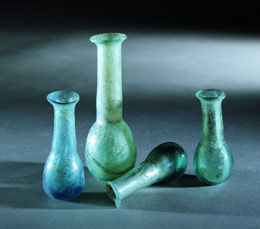
Balsam containers
The small glass vessels known by the generic definition of “balsam container” did not only contain balsams or unguents, but also pharmaceutical remedies and aromatic essences. The chemical analysis of the contents of several of these receptacles permits us to appreciate the wealth of the Roman pharmacopoeia and to reconsider their roles in domestic ware. For the most part, remedies were made of plant extracts.
In his Naturalis Historia (I century A.D), Pliny the Elder describes the properties of thousands of these extracts and, in more than one occasion, suggests preserving them in small ampullae and containers made of glass. Though the naturalist does not state the exact forms of these receptacles, we can suppose he was referring to vessels similar to balsam containers. Moreover, the attention shown by the Romans for the scrupulous care of the body somewhat erased the confines between medicine and cosmetics.
1
Glass
H. 7,3: diam. 2,9
Pompeii
SAP, inv. 8997a
I century A.D.
2
Glass
H. 7,5; diam. 2,8
Pompeii
SAP, inv. 8997b
I century A.D.
3
Glass
H. 10,5; diam. 3,6
Pompeii
SAP, inv. 9097
I century A.D.
4
Glass
H. 6,6; diam. 2,9
Pompeii
SAP, inv. 9130
I century A.D.
|
 previous |
next
previous |
next 
|