
 |
|
|
|
|
|
|
|
|
|
|
|
|
|
|
|
|
|
|
 |
 |
|
||||||||||||||||
 |
 |
 |
 |
 |
 |
 |
 |
 |
 |
 |
 |
 |
 |
 |
 |
 |
|
|
 |
|
|||||||||||||||||
 |
 |
 |
 |
 |
 |
|
||||||||||||
 |
|
|||||||||||||||||
 |
|
|||||||||||||||||
 The telescope, measurement of time and longitude
6.4 - The triumph of the clock
 |
 |
 |
 |
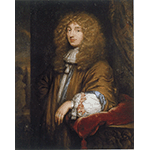
The pendulum as a device for stabilizing clocks was developed by Huygens in theoretical studies that, in the wake of Galileo's new physics, demonstrated the properties of the "cycloid" curve. However, Hoygens' cycloidal pendulum clock was unable to maintain the time of the place of departure during sea voyages, due to the continuous oscillations of the ship.
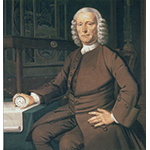
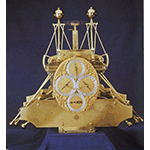
It was John Harrison (1693-1776) to design devices that functioned correctly even at sea. Over the course of almost thirty years he built four superb marine timekeepers. From the first model of notable size and very heavy, completed in 1735, Harrison arrived in 1759 at an instrument that could be held in the palm of a hand. With this device, the so-called H-4, he brilliantly solved the problem of longitude and - although not without difficulty - managed to earn the reward that had been offered by the English government in 1714.
| ©IMSS 2008 P.zza dei Giudici 1 50122 Florence P.I. 01346820481 |
